

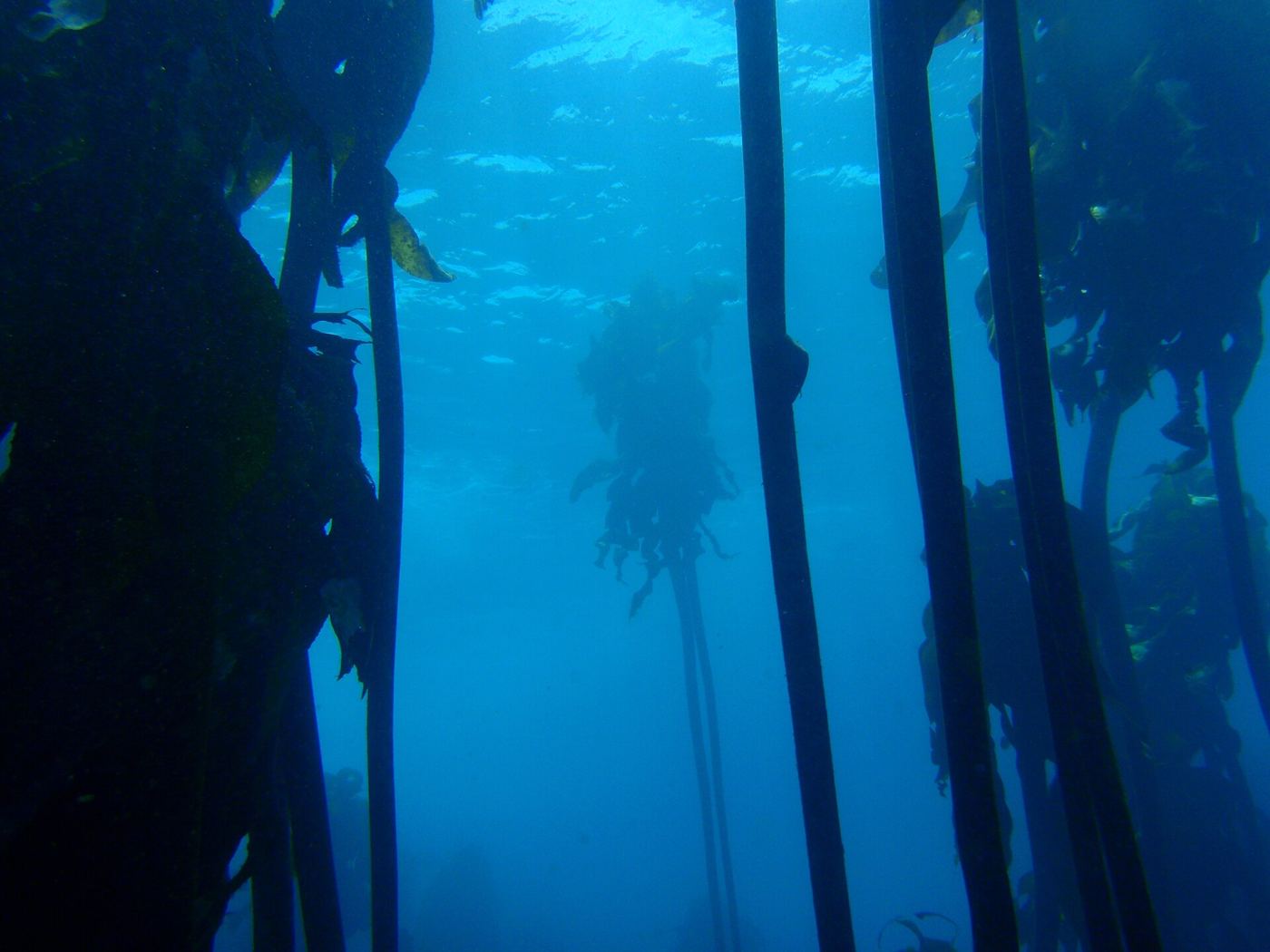
Beneath the cold water off many temperate coasts, tall strands of kelp sway in the current like an underwater forest, and scientists are paying closer attention to what that forest quietly does for the planet. Kelp grows remarkably fast, sometimes by tens of centimetres in a single day, drawing carbon dioxide from seawater as it builds long, leafy fronds. When pieces break away and sink, some of that carbon can be carried into deeper water, where it may stay locked away for much longer. At the same time, the dense canopy offers shelter for young fish, crabs and other small creatures that would otherwise be exposed to predators in open water. Researchers now describe kelp beds as both climate helpers and nurseries, two roles that make their decline in warming seas especially concerning. In several regions, marine heatwaves and grazing sea urchins have thinned forests that once stretched for miles. Restoration teams are responding by removing excess urchins, seeding healthy kelp onto reef surfaces and protecting the predators that naturally keep grazing in balance, hoping these living forests can recover their full ecological strength.
What the Evidence Shows
Recent surveys using divers, drones and underwater cameras give a clearer picture of how much carbon healthy kelp actually holds and how quickly damaged beds can return. Teams comparing restored sites with untouched forests found that fish numbers rose within a single season once new fronds formed a canopy, while shellfish and juvenile rockfish returned soon after. The carbon story is more complicated, because scientists must track where detached kelp finally settles rather than assuming it all reaches the deep ocean. Sediment samples and ocean current models are now helping them follow that journey more honestly. Even with those uncertainties, ecologists argue that protecting kelp makes sense on biodiversity grounds alone, quite apart from any climate benefit. Trials also show that locally sourced kelp seed, matched to the temperature of each bay, survives far better than seed brought in from distant coasts. Community groups have joined many projects, helping to plant lines and monitor growth through the year. If those efforts scale up, researchers say, kelp restoration could become one of the most practical tools coastal regions have for rebuilding marine life while also storing carbon naturally. Reporting and analysis from sources such as Nature track the same developments, and specialists following the carbon-storing kelp forests say the direction is now consistent across independent lines of evidence.
The Wider Context
The wider context is a research landscape in which replication and open data now decide reputations. Findings connected to the carbon-storing kelp forests are being checked by independent groups with shared datasets, and the teams involved publish their methods in full so rivals can test every step. That discipline is slower than a headline cycle, but it is why results in this area increasingly survive first contact with scrutiny.
What Happens Next
What happens next in the story of the carbon-storing kelp forests will be decided by follow-up work already under way: larger samples, longer observation and instruments that have not yet come online. The researchers involved are unusually united on one point, that the current results justify the next investment of time and money. Readers will not have to wait long for the first tests of that claim. You can follow related developments in our coverage of science.
None of this will be settled by a single announcement, study or product launch. The pattern to watch is accumulation: independent confirmations, honest reporting of failures and steady improvement in the underlying numbers. Readers who follow those signals, rather than the loudest claim of the week, will understand this subject better than most of the commentary surrounding it suggests is possible.
