

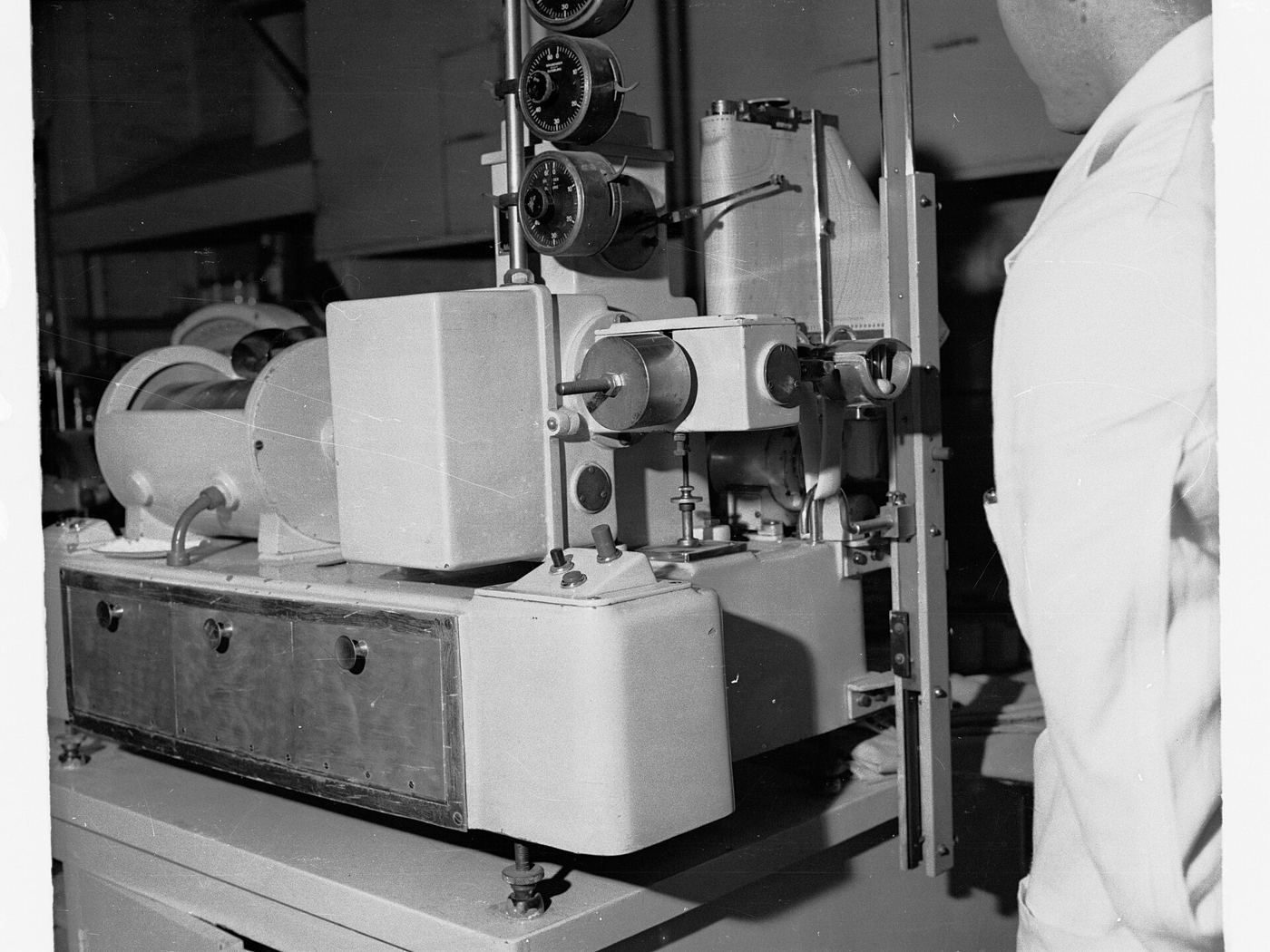
Glass is famous for blocking heat, yet a thread of glass stretched to a single atom wide lets heat pass through with surprising ease. Researchers at the University of Colorado Boulder reported on 11 November 2026 that heat flowed through such an atomic-scale glass contact in discrete steps, each reaching about 40 percent of the maximum allowed by quantum physics. The team used a scanning thermal probe microscope, a tool with a glass tip and a built-in thermometer that works like an extremely small fingertip. They pressed two pieces of glass together and then slowly pulled them apart until the contact narrowed to a thread just one atom wide before snapping. In ordinary glass, disorder scatters the vibrations that carry heat, but in a thread one atom wide there is no room for that disorder, so the vibrations pass straight through.
What the Evidence Shows
The result matters because glass in the form of silicon dioxide is used throughout computer chips as an insulating layer, and engineers are building ever smaller devices. Understanding how heat moves at the atomic scale could help them design nanoscale electronics that stay cool enough to work reliably. The microscope used in the study can measure heat flow through atomic-scale contacts in many materials, both metals and insulators, giving researchers a new way to watch the tiniest particles transfer energy. Lead researcher Longji Cui said the team was surprised to find that an insulator could carry heat so efficiently at that scale. The findings were published in the journal Nature Nanotechnology, and the researchers say the technique could guide the design of smaller and more efficient electronic components in future chips. Reporting and analysis from sources such as Nature track the same developments, and specialists following the atom-wide glass thread say the direction is now consistent across independent lines of evidence.
The Wider Context
The wider context is a research landscape in which replication and open data now decide reputations. Findings connected to the atom-wide glass thread are being checked by independent groups with shared datasets, and the teams involved publish their methods in full so rivals can test every step. That discipline is slower than a headline cycle, but it is why results in this area increasingly survive first contact with scrutiny.
What Happens Next
What happens next in the story of the atom-wide glass thread will be decided by follow-up work already under way: larger samples, longer observation and instruments that have not yet come online. The researchers involved are unusually united on one point, that the current results justify the next investment of time and money. Readers will not have to wait long for the first tests of that claim. You can follow related developments in our coverage of science.
None of this will be settled by a single announcement, study or product launch. The pattern to watch is accumulation: independent confirmations, honest reporting of failures and steady improvement in the underlying numbers. Readers who follow those signals, rather than the loudest claim of the week, will understand this subject better than most of the commentary surrounding it suggests is possible.
