

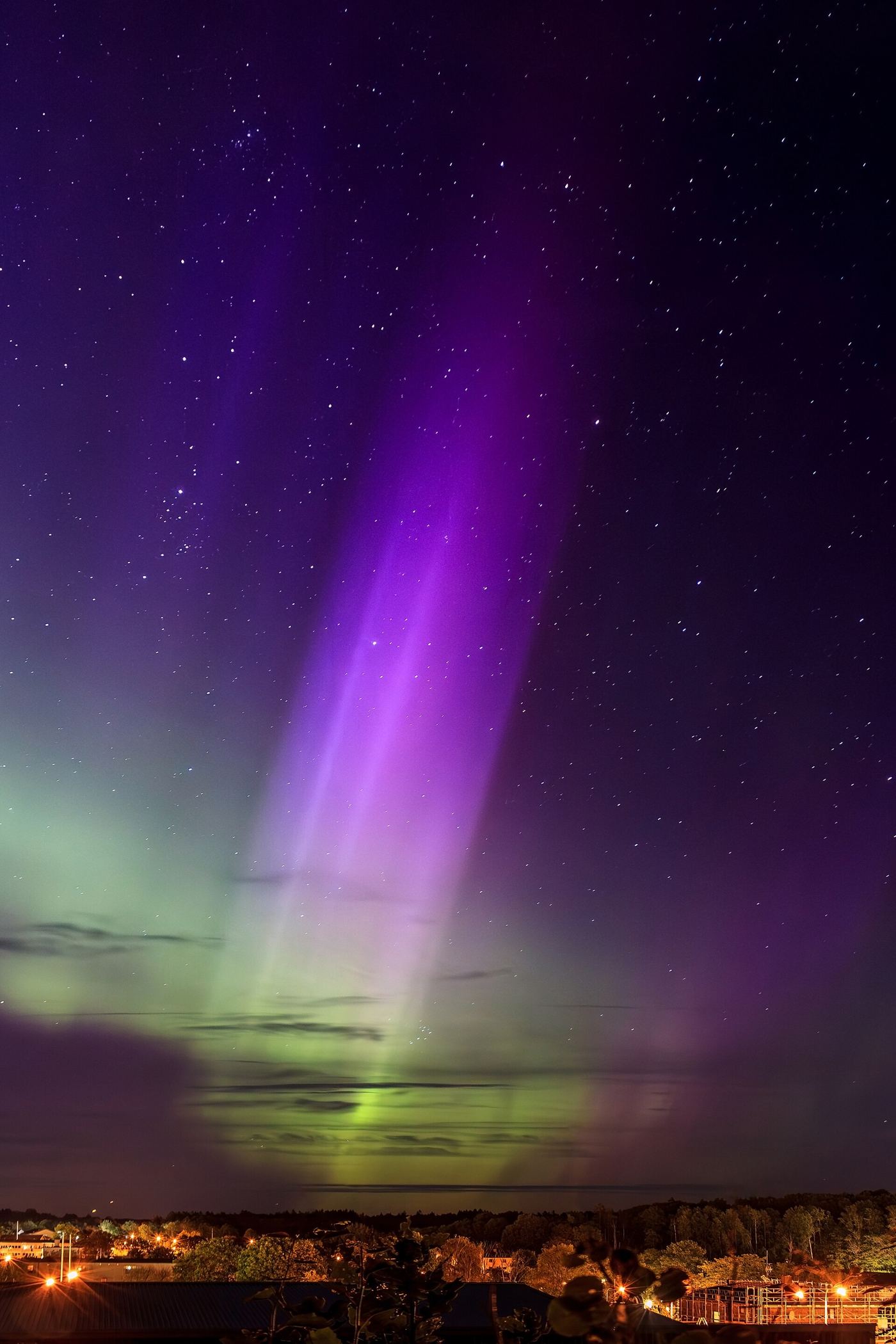
High above the Arctic Circle, on a clear winter night, ribbons of green and violet light can ripple across the sky in a silent, shifting display. These are the auroras, known as the northern lights in the far north and the southern lights around Antarctica, and they are born far above the Earth where the solar wind meets the planet’s magnetic field. The Sun constantly streams charged particles into space, and when a gust of this wind reaches Earth, the magnetic field funnels many of those particles toward the poles. There they collide with oxygen and nitrogen atoms high in the atmosphere, and each collision releases a tiny flash of light. Oxygen usually glows green, while nitrogen can add pink, purple and blue edges to the display. The result is a shifting curtain of colour that can hang quietly for hours or suddenly surge across the whole sky. People have watched auroras for thousands of years, and today scientists study them for their beauty and for what they reveal about space weather.
What the Evidence Shows
Forecasting the aurora has become a practical science, not just a hobby for sky watchers. Satellites parked between the Sun and the Earth watch the solar wind constantly, measuring its speed and the direction of its magnetic field, and when conditions look favourable, forecasters issue alerts that send photographers and tourists outside within the hour. The same storms that create beautiful displays can also disturb radio signals, confuse navigation systems and even stress power grids, so airlines, satellite operators and grid managers watch the same forecasts closely. Strong displays appear most often near the poles, but during powerful storms the lights can reach much further toward the equator, thrilling viewers in places that rarely see them. For travellers, the best chances come on dark, clear winter nights, far from city lights, when the Moon is low and the sky is at its darkest. Reporting and analysis from sources such as Nature track the same developments, and specialists following the auroras painting the polar sky with solar wind say the direction is now consistent across independent lines of evidence.
The Wider Context
The wider context is a research landscape in which replication and open data now decide reputations. Findings connected to the auroras painting the polar sky with solar wind are being checked by independent groups with shared datasets, and the teams involved publish their methods in full so rivals can test every step. That discipline is slower than a headline cycle, but it is why results in this area increasingly survive first contact with scrutiny.
What Happens Next
What happens next in the story of the auroras painting the polar sky with solar wind will be decided by follow-up work already under way: larger samples, longer observation and instruments that have not yet come online. The researchers involved are unusually united on one point, that the current results justify the next investment of time and money. Readers will not have to wait long for the first tests of that claim. You can follow related developments in our coverage of science.
None of this will be settled by a single announcement, study or product launch. The pattern to watch is accumulation: independent confirmations, honest reporting of failures and steady improvement in the underlying numbers. Readers who follow those signals, rather than the loudest claim of the week, will understand this subject better than most of the commentary surrounding it suggests is possible.
